

Growing Spending on Digital Experience Design
No matter how excellent your product or service is, a company cannot succeed without a positive client experience. And now that the epidemic has caused many consumers to switch to consuming goods and services online, businesses are beginning to recognize the significance of a digital customer experience. Because of the complexity of customer connections brought about by the advent of digital technology, company leaders are investing in customer digital design experiences and devising ways to manage customer interactions in order to attract and keep new consumers.
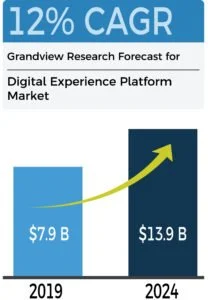
Because of the evolving relationship that consumers have with businesses and technology, the legendary vehicle designer Gerry McGovern's statement from years ago—"The customer isn't king anymore; the customer is a dictator"—is more relevant now than ever. Based on discussions with our investors and entrepreneurs, we predict the following trends for the rest of 2021 as global Fortune 500 businesses reallocate their digital transformation funds towards a tremendous acceleration of digital and design capabilities:
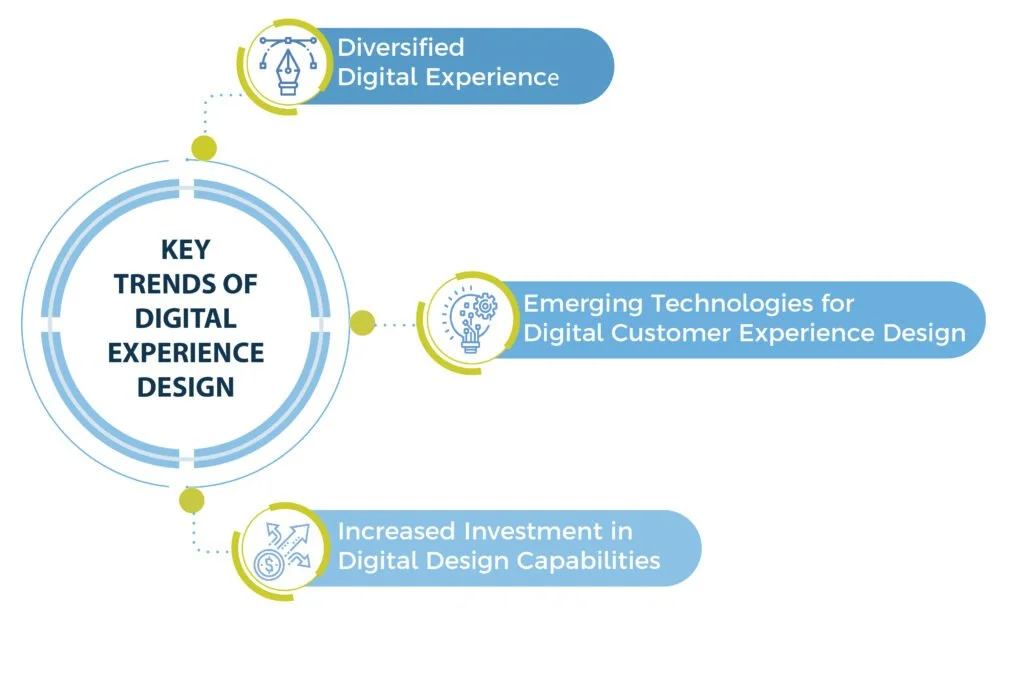
Varied Online Experience
Customers can increasingly enjoy digital experiences outside their laptops and mobile devices because to the expansion of internet accessibility and developing technologies like artificial intelligence and machine learning. Now that companies are employing cross-platform tactics, it is crucial to design distinct experiences for every platform and device rather than replicating the same experience across them all. In order to operate an app across an ever-increasing number of digital channels, users will need to have a consistent, unified, and planned consumer trip across a variety of modalities (touch, voice, gesture, etc.).
New Tools For Designing Digital Client Experiences
New technologies such as artificial intelligence, virtual and augmented reality, intelligent voice assistants, and the Internet of Things (IoT) are developing quickly, giving forward-thinking businesses the chance to be creative and unique in how they interact with their clientele. Mobile augmented reality will grow in popularity, expanding the potential for creative and distinctive experiences in advertising, teaching, entertainment, and shopping. In order to produce designs and prototypes more quickly, digital experience design will advance to use automation, computational design, and analytics. In addition to enabling hyper-personalization for users and accelerating brand acceptance and happiness, technological interaction will be natural and intuitive.
Greater Expenditure On The Capacity For Digital Design
With easy access to information and reviews, as well as the decreasing distinction between hardware, software, and services, businesses require more robust design capabilities than ever before. As a result, businesses of all sizes have been increasing their investments in developing internal digital design skills. Over two-thirds of consumer loyalty is driven by a smooth Digital consumer Experience (CX), which outperforms both price and brand combined, according to Gartner. In order to improve competency, scalability, and services, they are bringing in specialist design partners and assessing their own cutting-edge design studios and labs. In particular, consulting firms and product experience firms are investing in design studios and firms. For instance, The Working Group (TWG), a cloud and digital consulting company catering to large and mid-market clients, was acquired by Deloitte.
GTD anticipates that businesses from all industries will understand how important it is to invest precisely in core design skills and generate rapid digital wins in order to take advantage of new and developing market opportunities. As they search for fresh approaches to collaborate and collaborate with multinational strategic investors and businesses seeking to boost investment in digital experience design, we anticipate that specialized, customer experience design, and creative digital agencies will see tremendous growth prospects. Companies must, in our opinion, learn to adjust to these changes or risk losing market share to competitors that are more aware of and adept at handling the expectations and experiences of their customers.