

How Businesses Can Increase Innovation with Digital Product Engineering
Big businesses in all industries are increasingly up against disruptive pressures from companies that are prepared for the digital age and can better satisfy consumer demands by providing intelligent digital goods and services. Additionally, the adoption of digitalization and additional expenditures in the field have accelerated due to the pandemic-driven distant working environment. Leadership teams are starting to understand how critical it is to accelerate the digital transformation of their companies and incorporate digital product planning into the foundation of their industry-specific business models. As they go toward digital transformation, by partnering with or investing in a variety of digital product and services agencies that specialize in the end-to-end strategy of a product or service, including design, development, and go-to-market mechanism, the majority of digital laggard organizations are successfully launching digital products through digital product engineering and consistently gaining a sumptuous market share. These specialized companies possess skills in cutting-edge digital technologies like Data Analytics, AI/ML, IoT, AR/VR, etc. to create meaningful and disruptive products and services with streamlined experiences on cloud-enabled intelligent applications. They can also convert product development infrastructure into more sophisticated and data-driven platforms for application development.
According to GTD's focus on digital product engineering, big tech companies will keep investing in specialized companies to speed up the modernization of their digital infrastructure for product launch and development processes and advance it across their capabilities for creating connected, smart, and market-relevant products and related support services. These days, a growing number of tech companies are combining their technological innovations, developing new business strategies, and venturing into non-core product areas.
Accenture's investment in the Swedish company Cygni, which specializes in cloud, mobile, and full-stack software development, and Hitachi's recent acquisition of Digital Engineering Services Company GlobalLogic are just two examples of the recent wave of mergers and acquisitions in the Digital Product Engineering sector.
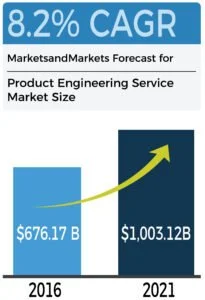
However, businesses find it challenging to stand out and compete on the basis of off-the-shelf software due to the rapid disruption, which results in much shorter product creation cycles. For any product organization, it's critical to balance factors like cost, time-to-market, and core differentiation. This creates a need for unique software solutions, which must adapt and integrate seamlessly into the customer's technology environment in order to generate value. Custom software solutions enable firms to quickly integrate several capabilities that are in line with the market's changing needs and trends. Therefore, you may keep your competitive advantage and long-term efficacy using unique software. Artificial intelligence, cybersecurity, data analytics, and machine learning are the main trends driving an increase in the use of custom software development.
Companies have been realizing the need for custom software development and pushing for more investment in the market. For example, Cognizant recently invested in Magenic Technologies, a custom software developer, to expand its global engineering talent network and expertise; Accenture recently acquired Cygni, a Swedish software development company, to expand its Cloud First and Software Engineering Capabilities. These businesses were given funding because of their outstanding and complementary skills in developing custom software, and the acquirer wanted to grow their portfolio and gain access to more clients and sales channels so that the integrated business could create value.
What effects do technological advancements in digital product creation have on businesses?
Changing consumer preferences and behavior are addressed by new, unique engagements.
Technological innovation has led to the development of worthwhile experiences and goods that satisfy new and developing demands, enhancing the loyalty of existing clients and attracting new ones. Industry leaders may combine technical skills like data analytics and artificial intelligence (AI) to produce pertinent digital solutions since they have an abundance of data and resources. A variety of innovative and unique items improve customer interactions, which in turn raises customer lifetime value.
Competitive new items increase profitability by creating new revenue sources.
Businesses can gain insights on new product development opportunities and gain a competitive advantage in the always changing market by utilizing AI and data analytics. New digital products are promoted quickly thanks to sophisticated digital product development platforms, opening up new revenue streams for businesses.
Market leaders have reinstated the necessity of advancement in digital product development for business continuity with their investment in digital capabilities. Companies that are looking into enhancing their digital product development strategy should keep the below trends that are expected to dominate 2021, in mind.
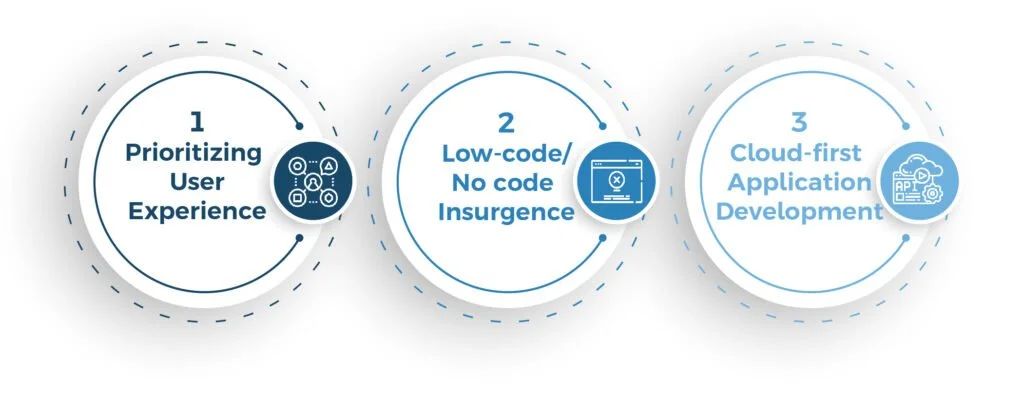
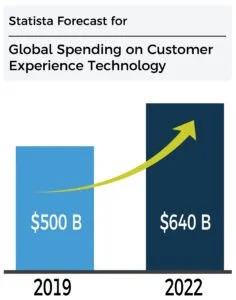
SETTING THE USER EXPERIENCE FIRST
No matter how excellent a product or service is, a firm cannot succeed without satisfied customers. The most crucial component of every business is its customers. But as digital technology has grown, customer connections have become more complicated. As a result, corporate executives have had to come up with ways to handle their goods and services in a way that makes the user experience easier, particularly during the epidemic. By maintaining user engagement and being more user-centric across platforms—easy, efficient, consistent, intuitive, and enjoyable—businesses hope to enable users to do their task while utilizing a product or service. Since the user experience is at the heart of the product, businesses have understood that they must invest in their user experience in order to boost their profit margins. To improve its digital capabilities, Infosys, for instance, recently purchased Kaleidoscope Innovation, a product design and development firm.
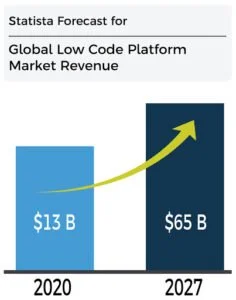
INSURGENCE WITH LOW-CODE OR NO CODE
Professionals may manage smaller jobs and projects on their own without bothering a busy engineering team thanks to low-code/no-code platforms. Smaller companies that lack the resources to hire a complete engineering team can benefit from these platforms. Unlike traditional computer programming, which not only requires much more technical expertise and training but also makes it difficult for other stakeholders who do not know the specific programming language being used to collaborate, anyone in an IT department or with some basic familiarity with the back end of software can learn to use these platforms. As a result, businesses have increased their investments in low-code/no-code platforms; Volition Capital recently invested $68 million in Creatio.
APPLICATION DEVELOPMENT IN THE CLOUD
Since 2019, cloud technology adoption has grown astronomically, and the current extraordinary economic climate has only exacerbated this expansion. Instead of considering methods to take advantage of growth during this time, companies that have not kept up with investing in cloud adoption strategies are now struggling to preserve business continuity amid the global disruption produced by the pandemic. To use cutting-edge technology like as 5G, Big Data, Artificial Intelligence (AI), and the Internet of Things (IoT), A unified platform and streamlined service delivery and support are made possible by cloud technologies. The need for cloud modernization and IT automation has increased due to the pandemic-driven remote work environment, prompting businesses to make additional expenditures in the field. For instance, HPE expanded its product line last year by acquiring Cloud-Native Security Startup Scytale.
The widespread use of digital applications around the world has accelerated technology development to forecast market trends and produce digital assets at previously unheard-of speeds. As a result, at GTD, we are seeing a shift in how businesses of all sizes and verticals approach digital product engineering. They would come out of the crisis stronger if they invested in digital product engineering services to plan and carry out digital growth across their product development strategy and product range.