
How Digital Engineering Is Changing the Energy Sector to Power the Future
A once-in-a-century change is taking place in the world of energy. Utilities and infrastructure suppliers are forced to reconsider every aspect of their business due to aging grids, growing electricity consumption, and rapid decarbonization. As a result, the next pillar of energy system innovation is digital engineering. Grid-scale simulation and AI-enabled predictive maintenance are just two examples of how digital engineering is now more prevalent than it was in the past. All throughout the energy value chain, it is already integrated. Model-based systems engineering, real-time analytics, and software-defined infrastructure are becoming essential for controlling complexity, cutting emissions, and facilitating more intelligent grid modernization.
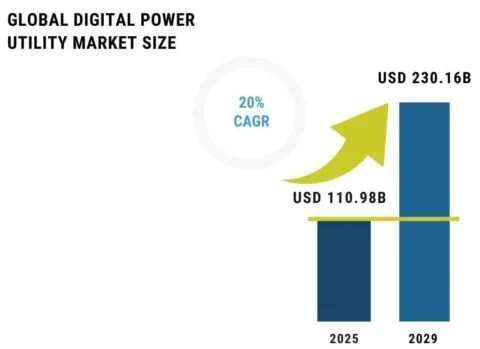
According to Research and Markets, the global digital power utility market is projected to increase at a 20% CAGR, from $110.98 billion in 2025 to $230.16 billion by 2029. Transmission, distribution, and energy storage systems are starting to rely on digital twin systems, cloud-first platforms, and AI-driven analytics.
Important Market Segments and Growth Factors
Utilities and energy businesses are increasing their investment in technologies that combine software intelligence and technical precision as the global market for digital power utilities is expected to reach $230 billion by 2029. The change is evident: intelligent, software-defined infrastructure that permits real-time control, predictive capabilities, and seamless integration of renewable energy sources will drive the future of energy in addition to hardware advancements.
The following are the main areas of concentration where digital engineering is having the biggest influence:
Smart Grids and Network Automation: To dynamically balance load, control distributed energy, and incorporate renewables, grid operators are implementing sensor-based, software-integrated infrastructure.
Digital Substations and HVDC Systems: Substations are evolving into fully software-managed, remotely monitored nodes using model-based configuration and real-time diagnostics.
Green Hydrogen and Clean Tech Integration: Engineering tools are being used to model electrolyzer systems, battery chemistries, and hydrogen logistics.
AI for Predictive Maintenance: Utilities are shifting from reactive repairs to predictive insights, using machine learning to prevent asset failures before they occur.
Grid Simulation and Scenario Modeling: By simulating demand spikes, climate events, or renewable variability, digital platforms enable utilities to make data-driven capital allocation decisions.
New Developments in Digital Engineering for Energy
Digital engineering is evolving from a support role to a strategic growth engine as energy systems change to facilitate electrification, decentralization, and decarbonization. AI, cloud computing, and simulation technologies are coming together to create a new kind of energy infrastructure that is secure, intelligent, and adaptable by design. A number of innovation topics are gaining traction in the sector as utilities are under pressure to update outdated facilities while incorporating renewable energy sources.
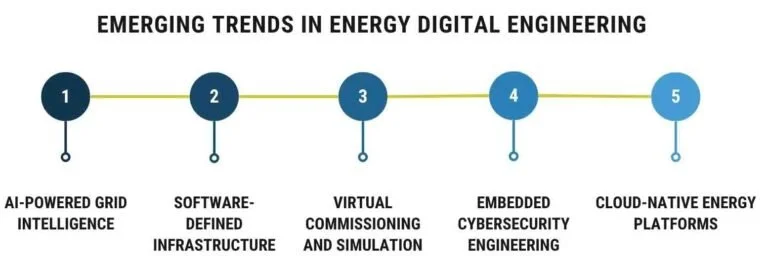
The following five major developments are revolutionizing the planning, implementation, and administration of energy systems:
AI-Powered Grid Intelligence: Artificial intelligence is revolutionizing operational dependability and cost optimization in power systems, from weather-driven demand forecasting to transformer breakdown prediction.
Software-Defined Infrastructure: Similar to software-defined automobiles, digital engineering is enabling dynamic control of physical assets through software upgrades. This enables utilities to respond more quickly to shifts in policy, spikes in demand, and fluctuations in renewable energy.
Virtual Commissioning and Simulation: Energy companies can save costs, shorten time-to-market, and reduce risk by simulating substations, generation assets, and even entire grid zones prior to actual deployment.
Embedded Cybersecurity Engineering: To protect against growing cyber risks, secure-by-design engineering techniques are being included into control systems, SCADA networks, and smart devices as the energy industry digitizes.
Cloud-Native Energy Platforms: To facilitate quicker iterations and more agility, engineering teams are using cloud environments to manage digital asset models, stream real-time data, and communicate across regions.
How AI Is Reducing Carbon Emissions and Accelerating the Energy Transition
There is more to artificial intelligence than just streamlining processes. It's assisting the energy industry in addressing one of its main problems: cutting carbon emissions while satisfying rising demand. AI is significantly accelerate the transition to a low-carbon energy future through cleaner power generation and more intelligent usage. It provides energy providers, utilities, and grid operators with the resources they need to make quicker, more informed decisions.
Here are a few significant ways that AI is changing things:
Smarter energy dispatch: Operators can now choose when and how to employ various energy sources with the aid of AI algorithms. AI can prioritize low-carbon generation, such as solar or wind, during peak hours by examining demand, weather, and emissions data.
Improved renewable energy forecasting: Our ability to forecast solar and wind output is being enhanced by machine learning models. Energy businesses can prevent waste, lessen the demand for fossil fuel backup, and improve system balance with more precise forecasts.
Effective demand-side response: AI is able to determine where and when power consumption can be changed without negatively impacting consumers. This enhances grid stability, reduces emissions, and lessens load during peak hours.
Monitoring and cutting emissions: AI-powered solutions are providing businesses with greater insight into their carbon impact through ESG reporting and real-time carbon accounting. This facilitates meeting climate goals and adhering to rules.
By 2026, the International Energy Agency predicts that data centers and artificial intelligence would use twice as much electricity. Because of this, it is even more important for the energy systems that drive AI to simultaneously grow more intelligent and environmentally friendly. AI is already essential to the industry's operations, planning, and decarbonization.
Key Players' Strategic Actions
A new wave of investment in digital engineering is being driven throughout the energy sector by the worldwide push toward electrification, automation, and decarbonization. In order to upgrade outdated systems and create intelligent, software-defined energy platforms, traditional OEMs, software behemoths, and infrastructure leaders are quickly changing their approaches. Through targeted, high-impact investments, these businesses are changing the competitive landscape with everything from cloud-native infrastructure and digital substations to AI-powered grid tools.
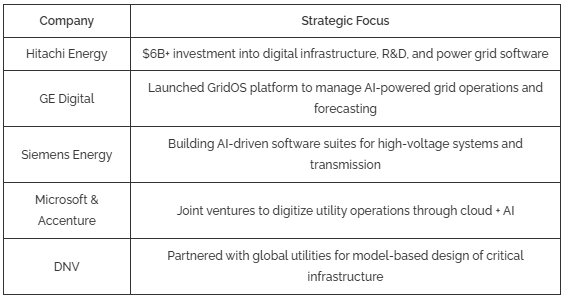
Notably, Hitachi's most recent $4.5 billion commitment (2024–2027) calls for developing digital substations, software platforms, and AI-first infrastructure in order to speed up efforts to electrify the world.
M&A Environment: Consolidation in Full Force
Traditional asset transactions are giving way to software platform, smart grid, and AI-powered engineering tool acquisitions in the energy M&A market. Over 4,100 deals totaling over $216 billion were performed in electric network engineering and related services between Q1 2020 and Q3 2024, with an average of over $52 million per agreement. A significant portion of these transactions focused on digital infrastructure. Energy-transition assets drove $79 billion in M&A activity in the first half of 2024, with $21.5 billion going into solar and wind technologies that leverage platform-based asset management, IoT monitoring, and predictive analytics. In the meanwhile, over $3 trillion was invested globally in clean energy infrastructure in 2024, with over $2 trillion going into smart grids, storage, and renewables. This led to a surge in M&A centered on digital upgrades. A strategic shift toward decarbonized and digitalized energy assets is indicated by the fact that energy-transition M&A accounted for 13.4% of total global deal value in 2024, up from the year before.
Deals that prioritize technology are becoming more common. The preference for late-stage, de-risked projects that include software-enabled control systems and digital management tools is evident in renewables-focused M&A. Similar to software industry trends, utilities and infrastructure investors are increasingly purchasing platforms with cloud-enabled control systems, AI-driven forecasting tools, and IoT device management.
The focus of M&A has shifted from isolated assets to integrated technological platforms, making it more selective. In order to expedite digital transformation roadmaps, corporations are maneuvering to secure qualified talent pools, software IP and platforms for predictive analytics, simulation, and automation, and specialized engineering skills in grid modernization and digital control. As they sprint to the forefront of digital grid modernization, engineering firms, utilities, and private equity are all vying for the same resources and human talent.
Three Prominent Mid-Market Agreements
ACCENTURE GETS BOSLAN
Boslan, an engineering and consulting firm with a focus on net-zero infrastructure, was purchased by Accenture. By helping clients design, simulate, and implement clean energy systems with engineering efficiency and carbon reduction in mind, this agreement strengthens Accenture's capacity to provide digital transformation and sustainable plant engineering services.
ICF PURCHASES APPLIED ENERGY GROUP (AEG)
Ameresco sold Applied Energy Group (AEG) to ICF, a provider of technology services and consultancy. Energy consulting, product engineering, and smart monitoring systems for utilities and energy-intensive enterprises are among AEG's areas of expertise.
AXISCADES TECHNOLOGIES PURCHASES EPCOGEN
Global engineering solutions provider Axiscades Technologies Ltd. purchased Hyderabad-based Epcogen, an expert in oil and gas, petrochemicals, refineries, and renewables engineering and execution. Epcogen, which is well-known for its work in energy storage and emission control, strengthens Axiscades' capacity for sustainable plant engineering and extends its presence throughout the Middle East and North America. Additionally, the agreement fosters innovation in renewable energy solutions and creates chances for cross-selling.
The goal of digitizing the grid at scale is unifying cloud-native engineering organizations, energy infrastructure investors, and private equity firms.
Prospects for the Future: Transitioning from Asset-Heavy to Software-Led
Digital engineering will play a major role in the functioning of energy systems by 2030. Important trends are emerging as the industry moves from asset-heavy infrastructure to intelligent, software-led systems. Model-based design tools will be used to manage decentralized energy, and artificial intelligence will automate real-time grid functions including fault detection and dispatch. Cyber threats, climate extremes, and self-healing networks will all be addressed by resilient engineering. Localized control with system-wide optimization will be supported by cloud-edge designs. Smart, digitally built infrastructure is crucial given the global desire to electrify buildings, industry, and transportation. The foundation of this shift is digital engineering, which powers everything from grid orchestration to predictive maintenance. The next generation of clean, dependable power will be defined by energy businesses that prioritize digitalization.
Leading international investment banking company Global Tech Developers (GTD), which focuses on M&A deals and strategic investments in the Technology, Media, and Telecom (TMT) industries, is at the forefront of helping companies realize the revolutionary potential of digital engineering in the energy sector. GTD assists energy entrepreneurs in scaling their digital engineering capabilities with its knowledge of strategic investments and M&A. Success depends on collaborations that promote efficiency, creativity, and scalable infrastructure as AI, cloud, and model-based systems transform the industry. To achieve long-term growth and a competitive edge in the clean energy economy during this transition, digital engineering is crucial.