

In 2021, DevOps 2.0 Promotes Growth and New Investments
About ten years ago, when the DevOps movement began to take shape, most IT operations specialists and software engineers could not have predicted that the future they had in mind was already here. DevOps, which combines development and operations teams and procedures, has spawned the next wave of collaborative tools and techniques to produce better software more quickly. By adopting DevOps and increasing the agility of their systems, organizations may now strike back against the "waterfall paradigm" of working. More than 60% of developers are now releasing code twice as quickly as previously, thanks to DevOps, according to a 2021 Gitlab poll of 4300 engineers and managers.
Companies who want to benefit from faster application delivery, improved innovation, more stable operating environments, and performance-driven cross-functional teams have embraced DevOps due to its increasing success during deployment. “In order to expedite application delivery, Gartner predicts that 40% of enterprises will have moved from various point solutions to DevOps value stream delivery platforms by 2023, up from fewer than 10% in 2020. The market for initial public offers (IPOs) and mergers and acquisitions (M&A) in this industry is particularly favorable because to the demand for DevOps, and we anticipate that this trend will continue far into this year.
Copado's purchase of New Context, a fresh supplier of multi-cloud DevOps security to cloud users in government, infrastructure, and major organizations.
In order to implement its cloud plan and create a number of new product offerings for the upcoming year, Appfire acquired Artemis Software, an Atlassian Platinum Marketplace Partner.
Tech unicorn JFrog, which focuses on DevOps platforms, received $509 million in its enlarged IPO, which caused its shares to soar 62% in their Nasdaq debut.
A new degree of automation is required for self-scaling and self-healing systems to meet the exponential demand spikes due to the pandemic's multifaceted increase in distant labor, which is driving up digital content and bandwidth consumption. Organizations now have a competitive edge because to the successful implementation of DevOps and smart automation, which speeds up software delivery and shortens time to market. As a result, more businesses are investing more in the technology.
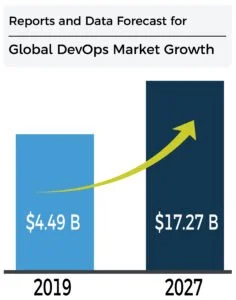
The majority of businesses now prioritize more than just product delivery as DevOps enters its second decade. The key themes that are anticipated to make DevOps crucial for businesses looking to increase their rate of innovation and organizational speed in 2021 are as follows:
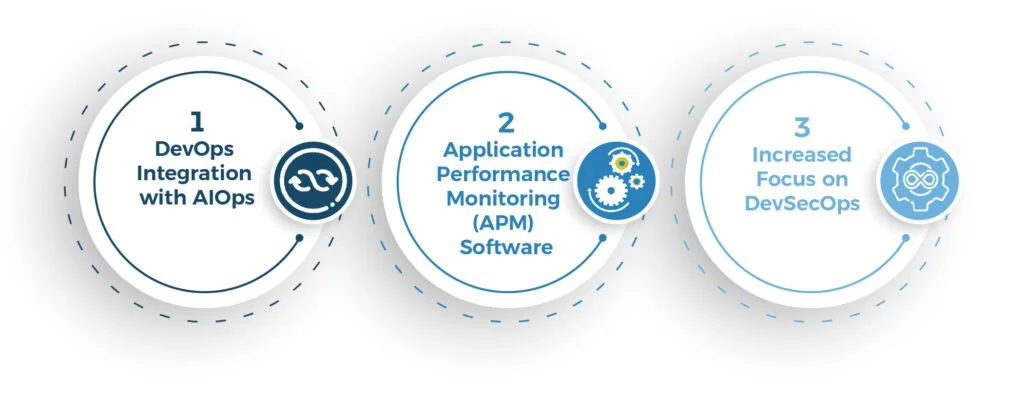
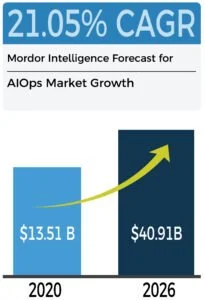
DEVOPS INTEGRATION WITH AIOPS
Artificial Intelligence for IT Operations, or AIOps, assists by automating the process from development to production, forecasting the impact of deployment on production, and automatically reacting to changes in the performance of the production environment. Due to the shortcomings of the current IT solutions for data management, businesses are using AIOps for a variety of purposes. Additionally, by coordinating data resources, AIOps may streamline workflows and boost profitability while keeping an eye on the behavior of IT infrastructure. It is imperative that the entire AIOps platform implementation process be in line with the restructuring of an organization's IT operations and adhere to an operational model tailored to the needs of the company.
APPLICATION PERFORMANCE MONITORING(APM) SOFTWARE
Obtaining prompt feedback is a crucial component of the DevOps lifecycle, particularly during deployments. During deployments, APM is essential for giving engineers quick feedback. This offers useful performance insights and critical assistance with deployment monitoring. We anticipate that in 2021, the growth of APM applications will become more pronounced. This year, it is anticipated that APM suppliers would broaden their product offerings to incorporate integrated infrastructure monitoring and analysis. Mordor Intelligence projects that the APM market will grow at a compound annual growth rate (CAGR) of 12% between 2021 and 2026.
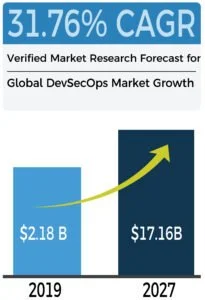
INCREASED FOCUS ON DEVSECOPS
Security flaws have been made possible by the remote work arrangement, which allows employees to operate from anywhere in the world. It is more crucial than ever to incorporate security into every aspect of business operations due to the surge in security and cyberattack threats. Furthermore, the importance of cloud-native security has increased as more businesses use serverless, Kubernetes, and other cloud-based technologies. In order to deliver new features quickly and frequently, businesses are migrating more quickly to the cloud. Security teams must adopt these new technologies and procedures to guarantee the speed and safety of these deployments. Because of this, businesses are increasingly integrating a DevSecOps procedure to add security to DevOps.
Many software companies struggle to implement DevOps, despite the fact that it can help them develop more quickly and respond more quickly to business needs. "DevOps is swiftly becoming popular, but doubts remain on how this relatively new approach to culture, automation, and platform design will deliver what it promises." "Many I&O leaders still confront barriers implementing and growing a DevOps practice," according to Gartner.
Managing these various technological capabilities along with people and process integration issues will be a key area of focus for business leaders looking to leverage these technology intersections to expand value creation, as we see increased focus in 2021 on AIOps, Application Performance Monitoring, and DevSecOps. Furthermore, it would be crucial for their companies to adapt to the new normal in terms of business demands. which offers substantial chances to expedite the development of these specialized DevOps and DevSecOps capabilities through targeted investments or strategic M&A. This has been a mantra for some of the top companies when it comes to not only attaining faster growth but also creating sizable global communities around their core and achieving better scalability, reliability, security, and happier customer developers.