

Investor Interest in Low/No-Code Partners
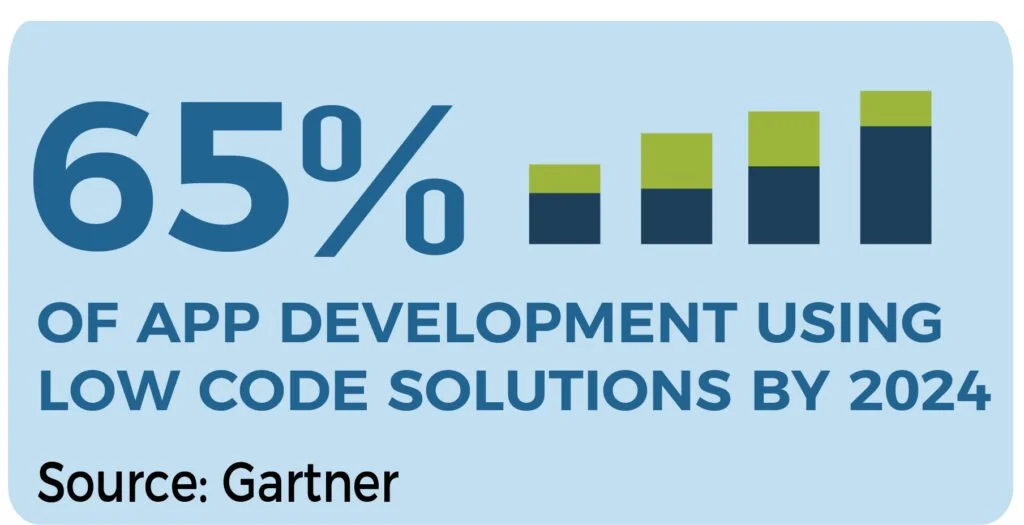
Software developers are under pressure to provide custom applications in large quantities that are tailored to the specific requirements of organizations due to the need for software automation and new applications for business operations. According to Gartner, the demand for software development services would probably expand fivefold, while the professional capacity to supply them will only slightly increase. As a result, low-code development platforms have been and continue to be created as a way to enable the rapid development and use of functional applications that may meet the particular data and process requirements of the company. Due to the need for quick application development using drag-and-drop and minimal coding, small businesses may now design sophisticated applications without having to master complex computer languages thanks to low code alternatives, making app development accessible to both enterprises and non-programmers. By 2024, low code application development will account for over 65% of all app development tasks, according to Gartner.
Businesses can obtain more valuable corporate accounts and digital business initiatives with the use of low-code and no-code technology. Low code initiatives that support the implementation of user interfaces, business logic, and data services without the use of complex codes are what propel innovation in software application platforms. The level of automation required to create software platforms rises with their complexity. NLG, NLP, computer vision, and gesture recognition are examples of AI-driven technologies that are driving innovative advancements toward future low-code, no-code platforms. These skills have led to an increasing number of low-code experts receiving support from both public and private investors. Many new alliances have been formed to support the leverage of smaller and mid-sized enterprises. Big providers like Salesforce, Microsoft and ServiceNow have created their own low-code platforms. Outsystems, Appian, Caspio, Matssoft, Bizagi, Mendix, and Agilepoint are some of the major low-code players, whereas FileMaker, Nintex, Quick Base, Airtable, Zudy, Zoho Creator, AppSheet, KiSSFLOW, and Ninox are some of the leading no-code companies. When taken as a whole, these businesses generate the majority of demand for low-code and no-code technology.
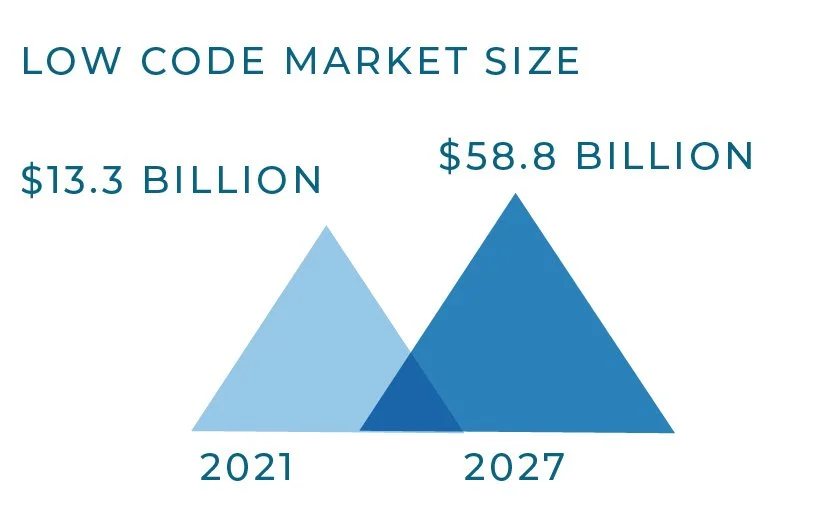
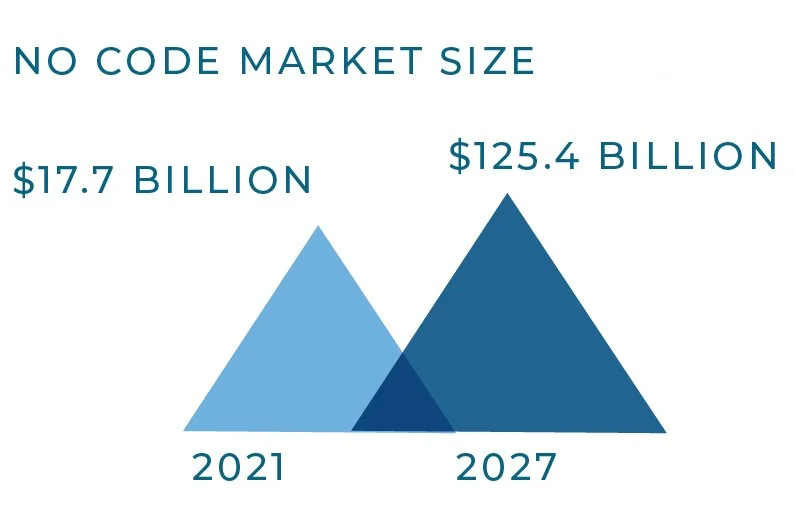
Even before the epidemic started in 2019, Gartner's study revealed that roughly 66% of large corporations were using at least four low code platforms. Since then, as the pandemic accelerated the speed of digital transformation, the use of low code platforms has only grown, prompting big businesses to invest in low code and no code specialized firms to either enter the market or develop their own low code/no code platforms. In order to demonstrate how low-code platforms provide seamless automated app deployment, operability, and scalability, the following are some recent Strategic Partnerships that specialist low-code organizations have formed with well-established worldwide enterprises across verticals.
SAP and AppGyver
AppGyver Oy, a trailblazing business that specializes in creating software tools for non-coding experts to construct online and mobile apps, was bought by SAP earlier this year.
Through this acquisition, SAP was able to assist its partners and clients in improving the usability of their applications and streamlining their IT systems to satisfy client demands. AppGyver's technologies are now part of SAP's Business Technology Platform, expanding the company's business process intelligence offerings. Customers, partners, and SAP may provide their teams a variety of integrated and simple application development tools by further improving the SAP application experience. These tools enable the creation of workflows, forms, robotic process automation, and lightweight case management.
Appgyver gains substantial advantages and long-term stability from being a part of SAP. AppGyver's enterprise clients will have additional prospects as a result of the connection with SAP solutions. The product roadmap will continue to provide both small-scale and enterprise-scale developer communities with attractive additions and enhancements because of the collaboration with SAP and their investments.
Uniface and Rocket Software
Uniface, a Netherlands-based company renowned for its open-source application platform that speeds up innovation by reducing the disincentive, was purchased by Rocket Software. All of the organizations that made up Uniface and its staff have now been merged into Rocket, which has substantial activities in the Netherlands already.
With decades of experience in IBM Z, IBM Power, and database and connection solutions, Rocket is equipped to assist multinational corporations in achieving their objectives.
Uniface is an enterprise-grade low-code application platform that speeds up the development of mission-critical applications while allowing developers to concentrate on the front-end (UX and business logic). According to Rocket, the COVID-19 pandemic has demonstrated the application of low-code solutions. Rocket's application development and modernization capabilities have expanded as a result of this acquisition, which also offers strategic investment in future innovation for better developer usability and end-user customer experience. The rocket team's efforts to boost the Uniface low-code development platform's value to businesses embrace Uniface's customer-centric R&D philosophy. Rocket's extensive quick application development experience is now accessible on the Uniface minimal code application platform since the company's increased R&D investment and broader developer pool benefit both developers and users. In a similar vein, Rocket's extensive experience of collaborating with ISVs to consistently develop and implement cutting-edge apps through investments in innovation benefits all Uniface partners.
AppSheet and Google
The eight-year-old, non-programming app AppSheet was purchased by Google. Through this acquisition, Google acquired a straightforward app creation platform for businesses that wish to create mobile applications without writing any code. Through the collaboration of these groups, businesses enable millions of citizen developers to more efficiently utilize third-party technologies for application design and development without the need for professional training. Google offers AppSheet a chance to grow and penetrate a wider market. Further integration with some of Google's special assets, such as G Suite and Android, greatly enhances the total benefits, which include enhanced functionality, scale, and performance. Google Cloud, which offers a thorough grasp of verticals including financial services, retail, and media and entertainment, is one of AppSheet's advantages due to its extensive industry knowledge. Google claims that the acquisition enabled them to continue offering no-code working and advancement through workflow automation, application integration, and API administration.
The aforementioned purchases show how common low code specialty platforms have grown. The ability to quickly create and use functional apps that can meet the organization's unique process and data needs is what is driving such a high uptake. Low code development platforms' value to large and mid-sized businesses must be acknowledged as a product offering as well as a capability-enhancing agent. These mutually beneficial investments also speed up product development, which lowers costs and generates a steady demand for Kubernetes features that are both reasonably priced and adaptable. Low-code suppliers and specialists continue to attract a lot of investment attention, and we at GTD anticipate that the variety of options in this market will expand dramatically.